Top 5 Niche All Mountain Snowboards Worth Considering in 2026
Find the right niche all mountain snowboard for your riding style. We compare five boards by flex, shape and terrain fit, with pros, cons and buying tips.
 By Miles Sinclair
Updated November 18, 2026
 By Miles Sinclair
Updated November 2026
A niche all mountain snowboard sits between a pure freeride board and a soft park stick, and it suits riders who want one board for groomers, powder and the occasional jump. Choosing one comes down to flex rating, camber profile, board shape and the kind of terrain you ride most. The five picks below were selected from product listings, brand positioning and common owner feedback patterns. We did not test them ourselves.
Our top picks at a glance
- 1TOP CHOICEBest overallNitro Prime Raw Men's Directional Twin SnowboardView on Amazon
- 2
 TOP CHOICEBest for playful freestyleMen's Burton Process SnowboardView on Amazon
- 3
 TOP CHOICEBest for beginners on a budgetESP 145 cm Freeride Snowboard with Flex BindingsView on Amazon
- 4
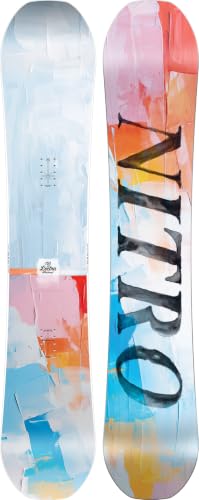 Best for women who ride all-mountainNitro Lectra Women's Directional Twin SnowboardView on Amazon
- 5
 Best for backcountry route planningBest Backcountry Skiing in the NortheastView on Amazon
Our Top Picks
| Product | Best for | Key feature |
|---|---|---|
| Nitro Prime Raw Men’s Directional Twin Snowboard | All-around riders | Flex 5/10, camber profile |
| Men’s Burton Process Snowboard | Playful freestyle | PurePop camber, twin shape |
| ESP 145 cm Freeride Snowboard | Beginners to intermediates | Solid core, flex bindings |
| Nitro Lectra Women’s Directional Twin | Women’s all-mountain riding | Flex 4/10, extruded base |
| Best Backcountry Skiing in the Northeast | Tour planning | 50 classic New England routes |
Nitro Prime Raw Men’s Directional Twin Snowboard
Nitro Prime Raw Men's Directional Twin Snowboard (Prime Raw, 155cm) | All-Mountain, Freeride, Flex 5/10, Camber, Extruded Base, Beginner/Intermediate
Best for: All-around riders who want one board for most terrain.
This directional twin suits intermediate riders who spend time on groomers, soft snow and mild side hits. Its mid-range flex is a sensible middle ground for a board that has to handle more than one kind of terrain.
Pros
- Flex 5/10 balances stability and playfulness.
- Camber profile offers good edge hold on firm snow.
Cons
- Less forgiving for absolute beginners in deep powder.
Men’s Burton Process Snowboard
Men's Burton Process Snowboard, 162cm | Process Snowboard—PurePop camber and twin shape for playful all-mountain freestyle
Best for: Playful all-mountain freestyle.
Riders who spend time in the park and want a board that still handles trails will find the twin shape easy to press and butter. The PurePop camber is built for pop and easy landings.
Pros
- Twin shape suits switch riding and park features.
- Camber gives lively rebound off jumps.
Cons
- Can feel light and chattery at high speed on hard snow.
ESP 145 cm Freeride Snowboard with Flex Bindings
ESP 145 cm Freeride Snowboard with Flex Bindings – Beginner to Pro – All-Mountain Snowboard with Solid Core Construction
Best for: Beginners on a budget.
This option is aimed at newer riders who want a board with a solid core and included flex bindings. The 145 cm length is short enough to turn easily for lighter riders.
Pros
- Shorter length is easier to control while learning.
- Flex bindings are included, which simplifies setup.
Cons
- Limited stability for heavier riders at speed.
Nitro Lectra Women’s Directional Twin Snowboard
Nitro Lectra Women's Directional Twin Snowboard, Abstrtact, 152cm | All-Mountain, Freeride, Flex 4/10, Camber, Extruded Base, Beginner/Intermediate
Best for: Women who ride all-mountain.
This women’s model is designed for riders who want a softer, more forgiving flex than the men’s Prime Raw. It suits beginners and intermediates on mixed terrain.
Pros
- Flex 4/10 is easy to initiate turns on.
- Extruded base is listed for durability.
Cons
- Softer flex can feel less solid at high speed.
Best Backcountry Skiing in the Northeast
Best Backcountry Skiing in the Northeast: 50 Classic Ski and Snowboard Tours in New England and New York
Best for: Backcountry route planning.
This guidebook covers 50 classic ski and snowboard tours across New England and New York. It is useful for riders who want to plan touring days before buying gear for them.
Pros
- Covers a wide range of route difficulty levels.
- Organized by region for easy trip planning.
Cons
- Route details can change with seasonal conditions, so check current reports.
Buying Guide
Flex rating
Flex describes how stiff the board feels underfoot. Softer boards (around 4/10) are easier to turn for beginners, while stiffer boards (6 or above) hold a line better at speed.
Camber profile
Camber gives edge hold and pop. Traditional camber suits carving and speed, while hybrid profiles soften the feel in powder and on rails.
Board shape
Directional boards are built for riding forward and suit powder and carving. Twin shapes are symmetrical and favor switch riding and park use.
Length and rider weight
Manufacturers usually publish weight ranges alongside length charts. Staying within the recommended range keeps the board responsive without feeling sluggish.
Good picks for this: Nitro Prime Raw Men’s Directional Twin Snowboard and Nitro Lectra Women’s Directional Twin Snowboard
FAQ
What makes a snowboard niche all mountain rather than freeride?
A niche all mountain board typically has a moderate flex and a shape that handles both groomed runs and soft snow. Freeride boards are usually stiffer and longer for high-speed stability.
Related reading
- Wide All Mountain Snowboard: 4 Best Picks for Every Rider (2026)
- What Is an All Mountain Snowboard? A Rider's Guide to Choosing One
- What Does All Mountain Snowboard Mean? A Rider's Plain-English Guide
- Voltsurf 157 Switchback All Mountain Snowboard: A Practical Guide (2026)
- Soft Flex All Mountain Snowboard: 5 Best Picks for Beginners (2026)
- Snowboard Freeride vs Freestyle vs All-Mountain (2026): Which Is Better for You?
About Miles Sinclair
Miles Sinclair is part of our editorial team and reviews and edits our snowboarding guides, checking product details against manufacturer specifications and owner feedback.
About the author
Miles Sinclair writes reviews and buying guides for Snowboard Everest.