Single vs Double BOA Snowboard Boots (2026): Which Is Better for You?
Single vs double BOA snowboard boots compared on fit, flex, comfort and setup. Find which lacing system suits your riding style and terrain.
 By Emily Parker
Updated November 10, 2026
 By Emily Parker
Updated November 2026
Single vs double BOA snowboard boots is one of the most common decisions riders face when shopping for a new pair. In short, a single BOA system suits riders who want a simple, lightweight lacing setup and do most of their riding on groomed runs. A double BOA system wins for riders who want more precise, zone-by-zone tightening, especially for all-mountain, freeride or any riding where the heel and forefoot need to be locked down separately.
Single vs Double BOA at a Glance
| Criteria | Single BOA | Double BOA |
|---|---|---|
| Lacing zones | One dial for the whole boot | Two dials: upper and lower zones |
| Fit adjustment | Tightens the full foot at once | Lets you set heel and forefoot independently |
| Heel lock | Good, depends on liner and shell fit | Typically stronger, with a dedicated lower dial |
| Comfort on pressure points | Can be tightened unevenly | Easier to loosen one zone to relieve pressure |
| Weight and simplicity | Fewer parts, slightly lighter | Extra dial and cable, slightly more to maintain |
| Ease of use with gloves | One dial to turn | Two dials to turn |
| Best terrain fit | Park, groomers, casual riding | All-mountain, freeride, varied snow |
| Ideal rider | Beginners, budget-minded riders, casual weekenders | Intermediate to advanced riders, riders with narrow or wide feet |
Fit and Lacing Precision: Double BOA Wins
The biggest practical difference between these systems is control over fit. A single BOA dial pulls the entire lacing cable through one channel, so every part of the foot tightens at the same rate. For many riders that works well. But if your heel lifts slightly while your forefoot feels comfortable, a single dial can force you to overtighten the front of the boot to fix the heel.
Double BOA systems split the lacing into two independent zones, usually an upper dial for the forefoot and cuff area and a lower dial focused on the heel and midfoot. This means you can snug the heel without crushing the toes. Manufacturers generally describe this as a more customizable fit, and riders with irregular foot shapes often find it easier to dial in.
Winner for fit precision: Double BOA.
Heel Hold and Ankle Support: Double BOA Wins
Heel hold matters more than most beginners expect. A heel that lifts inside the boot causes lost energy on heel-side turns and can lead to blisters. Double BOA designs usually give the lower dial a direct pull on the heel cup area, which tends to produce a firmer lockdown. Single BOA systems can achieve good heel hold too, but results depend heavily on how well the liner and shell match your heel shape.
If you already have a narrow heel and a snug shell, a single dial can perform just as well. If your heel is the first thing to move, double BOA is the safer bet.
Winner for heel hold: Double BOA, with a note that a well-fitted single BOA boot can be nearly as secure.
Comfort and Pressure Relief: Double BOA Wins
Pressure points are the most common reason riders return boots. A bony ankle, a sore top of the foot or a pinched forefoot often comes from uneven tightening. With a single dial, the only way to relieve a pressure spot is to loosen the whole system, which can make the rest of the boot feel sloppy. With a double system, you can loosen just the upper zone to ease pressure on the instep while keeping the heel locked.
Owners often report that double BOA boots are easier to live with over a full day because adjustments can be made on the lift without re-tightening everything. That said, a single BOA boot with a properly shaped liner can feel very comfortable, particularly for riders with average-width feet.
Winner for comfort and pressure relief: Double BOA.
Weight, Simplicity and Maintenance: Single BOA Wins
Single BOA systems have fewer components. There is one dial, one set of lacing cables and one guide path. That means slightly less weight on the boot and fewer parts that can wear, snag or need replacing. Riders who prefer a clean, minimal setup often like this. A single dial is also quicker to tighten on the go, since there is only one thing to turn.
Double BOA systems add a second dial and a second cable path. Owners rarely report major problems, but there is more to check if a cable frays or a dial needs cleaning after a wet season. If you ride in very cold or wet conditions and want fewer moving parts, a single BOA may suit you better.
Winner for simplicity and weight: Single BOA.
Ease of Use in Cold Weather and With Gloves: Single BOA Wins
Turning one dial with thick gloves is simpler than turning two. Riders who make frequent adjustments on the chairlift or in the cold often find a single dial faster to operate. Double BOA users can get used to the process, but the extra step adds time when fingers are numb.
Winner for ease of use: Single BOA.
Terrain and Riding Style: Depends on How You Ride
Lacing system matters less if your boot shell and flex do not match your riding. Still, the two systems tend to suit different terrain. Single BOA boots are common in park-focused and casual models, where the rider wants quick entry, a simple fit and minimal fuss. Double BOA boots are more common in all-mountain, freeride and performance lines, where riders want the heel locked for carving and the forefoot adjustable for long days in varied snow.
Neither system is inherently better for jibbing or better for carving. The boot’s flex pattern, liner and shell design do more to determine performance than the number of dials.
Winner for terrain versatility: Double BOA for all-mountain and freeride riding; single BOA for park and casual riding.
Which Should You Choose?
Use these guidelines to narrow your choice:
- Choose single BOA if you are a beginner or casual rider, you mostly ride groomers and the park, you want the simplest possible setup, or you are working with a tighter budget.
- Choose double BOA if you ride all-mountain, freeride or steep terrain, you have a heel that tends to lift, you have pressure points that need zone-by-zone adjustment, or you ride a full day and want to fine-tune fit on the go.
- Choose double BOA if you have a foot shape that does not fit a standard single-dial liner well, especially if your heel and forefoot need different levels of tightness.
- Choose single BOA if you value minimal weight, fewer parts to maintain or the quickest possible adjustment with gloves on.
Whatever you pick, try boots on with the socks you ride in and stand in them for several minutes. Flex your knees and check for heel lift. If you have foot concerns or a medical condition, consult a professional boot fitter before buying.
Recommended Options
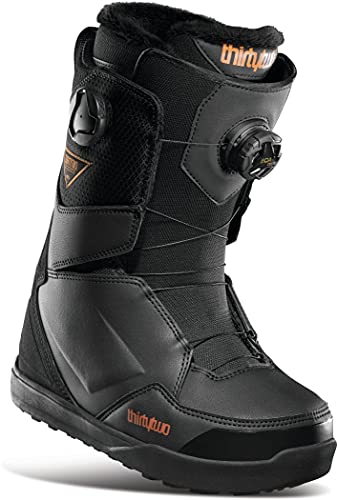
For a single BOA option, look at the View on Amazon, which is a widely sold boot with a single-dial lacing system. For a double BOA option, the View on Amazon uses two dials for independent zone tightening. Compare each model’s fit notes, flex rating and liner type before you order.
If you want a deeper look at double-dial models, the guide Double BOA Snowboard Boots: How to Choose, Fit and Set Up Your Pair covers sizing and setup in detail. Riders comparing single-dial options may also find Single BOA Snowboard Boots: 7 Best Picks for 2026 useful, and Lace vs Boa Snowboard Boots (2026): Which Is Better for Your Riding? explains how dial systems compare to traditional laces.
FAQ
Is double BOA better than single BOA for beginners?
Not necessarily. Beginners often do well with a single BOA because it is simpler to adjust and usually suits casual riding. Double BOA becomes more valuable as you ride more varied terrain and start to notice heel lift or pressure points.
Do double BOA boots fit better than single BOA boots?
Fit depends mainly on the shell and liner shape, not the lacing alone. Double BOA allows more precise adjustment, which helps riders with irregular foot shapes, but a well-matched single BOA boot can fit just as well.
Are double BOA boots heavier?
Often slightly, because of the extra dial, cable and guide hardware. The difference is usually small, but riders who count every ounce may prefer a single-dial design.
Can I replace a BOA dial or cable if it breaks?
In many cases, yes. Manufacturers typically sell replacement dials and lacing components. Check the warranty and parts availability for your specific model before buying, and consult the brand’s service information for repairs.
Does the lacing system affect boot flex?
Lacing affects how the boot holds your foot, but flex is mostly determined by the shell and internal construction. A stiff single BOA boot will still ride stiffer than a soft double BOA boot, so compare flex ratings directly.
Conclusion
When you compare single vs double BOA snowboard boots, the choice comes down to how much control you need over fit. Single BOA is simpler, lighter and easier to adjust with gloves, which suits casual and park riders. Double BOA offers independent heel and forefoot tightening, which suits all-mountain and freeride riders with heel lift, pressure points or varied terrain. Try both on with your riding socks, check heel hold and choose the system that matches how and where you ride.
Related reading
- Women's STW Double BOA Snowboard Boots: 3 Best Picks for 2026
- Thirtytwo STW Double BOA Snowboard Boots Women's: 3 Best Picks for 2026
- Thirtytwo STW Double BOA Snowboard Boots Review: Is It Worth It?
About Emily Parker
Emily Parker is part of our editorial team and reviews and edits our snowboarding guides, checking product details against manufacturer specifications and owner feedback.
About the author
Emily Parker writes reviews and buying guides for Snowboard Everest.